
Welcome to Senator Adriane Johnson's Legislative Website
Johnson: Hate has no place in Illinois
- Details
BUFFALO GROVE – In response to a thwarted mass shooting targeting the Hindu community, State Senator Adriane Johnson released the following statement:
“No one should ever have to fear for their safety because of their faith, culture or identity. I have said it before, and I will continue to say: hate has no place in Illinois.
“I am grateful this attack was prevented and commend the law enforcement officials whose swift actions helped protect innocent lives. This disturbing incident serves as a stark reminder that we must remain vigilant in confronting hate and intolerance wherever they arise.
“The Hindu community is an integral part of Illinois’ rich cultural fabric, and its members deserve to worship and live without fear. We must stand united against hatred and reaffirm our shared commitment to safety, dignity and religious freedom for all.”
Johnson, Edly-Allen to host community conversation on keeping Illinois affordable
- Details
 |
 |
BELVIDERE – In an effort to address ever-rising costs, State Senators Adriane Johnson and Mary Edly-Allen are hosting a community conversation on keeping Illinois affordable.
“Prices continue to rise at the grocery store, at the gas pump and beyond,” said Johnson (D-Buffalo Grove). “Together with my Senate colleagues, we have made an effort to lessen the financial burden on families and worked to put more money in people’s pockets.”
The free event will be held on Monday, Oct. 5 at 6 p.m. at Cristo Rey High School, located at 3106 Belvudere Rd. in Waukegan. Senate Majority Appropriations Leader Elgie R. Sims, Jr. will join the Lake County senators to further discuss how recent Illinois budgets and revenue plans are working to put money back in the pockets of working families.
Attendees will have the opportunity to hear what programs are available in Illinois, what legislation the General Assembly has passed to make everyday life more affordable and share their voices.
“No matter your income or ZIP code, prices continue to rise,” said Edly-Allen (D-Libertyville). “It’s vital to hear real experiences from community members so we, as elected officials, can help address the affordability crisis and make sure your voice is heard in Springfield.”
People with questions can contact Johnson’s office at 224-352-2849 or Edly-Allen’s office at 847-548-5631.
Johnson’s law strengthens menopause education and training
- Details
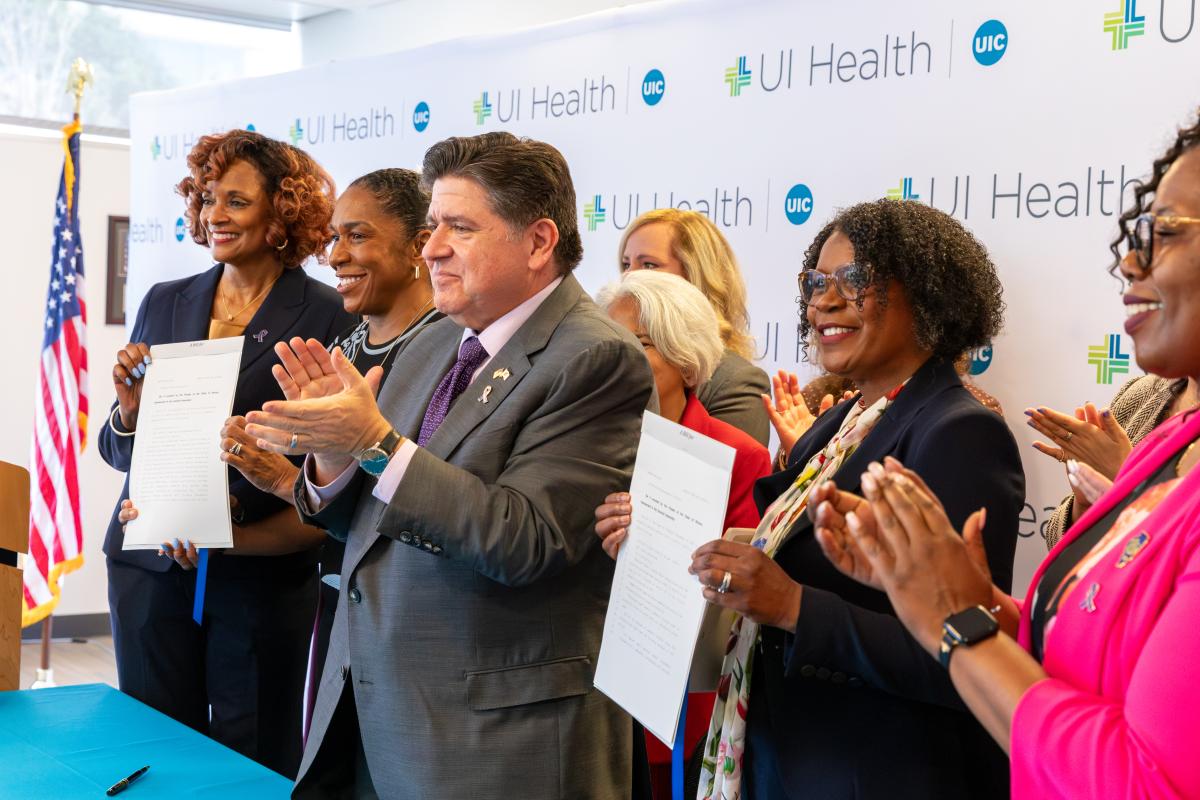
SPRINGFIELD – State Senator Adriane Johnson’s new law aims to strengthen medical education around perimenopause and menopause care by allowing this coursework to count toward Illinois’ required implicit bias awareness training.
“No one should feel dismissed or ignored while navigating menopause symptoms that impact their daily life, health and well-being,” said Johnson (D-Buffalo Grove). “Expanding education for health care professionals leads to more compassionate care and better outcome for patients.”
Senate Bill 3325 allows a continuing education course covering perimenopause and menopause to count toward the existing one-hour implicit bias awareness training already required for licensed health care professionals. The implicit bias training requirement has been in place since Jan. 1, 2023.
The law recognizes that education surrounding perimenopause and menopause — critical yet historically under-discussed stages of life — can help providers better understand patient experiences, improve communication and reduce disparities in care. The law will not create a new mandate. Rather, it incentivizes providers to expand their knowledge of menopause care while fulfilling existing requirements.
For health care professionals who provide maternal health services, previous law required implicit bias training to include instruction on maternal health risk factors affecting individuals from marginalized groups beginning July 1. Johnson’s law expands flexibility within the broader continuing education framework without adding new hours or requirements.
“Menopause and perimenopause affect millions of people, yet far too many patients struggle to find accurate information and proper care,” Johnson said. “Greater awareness and education can help ensure women receive the support and treatment they deserve.”
Senate Bill 3325 was signed into law Friday.
Johnson’s new law requires life-saving training
- Details
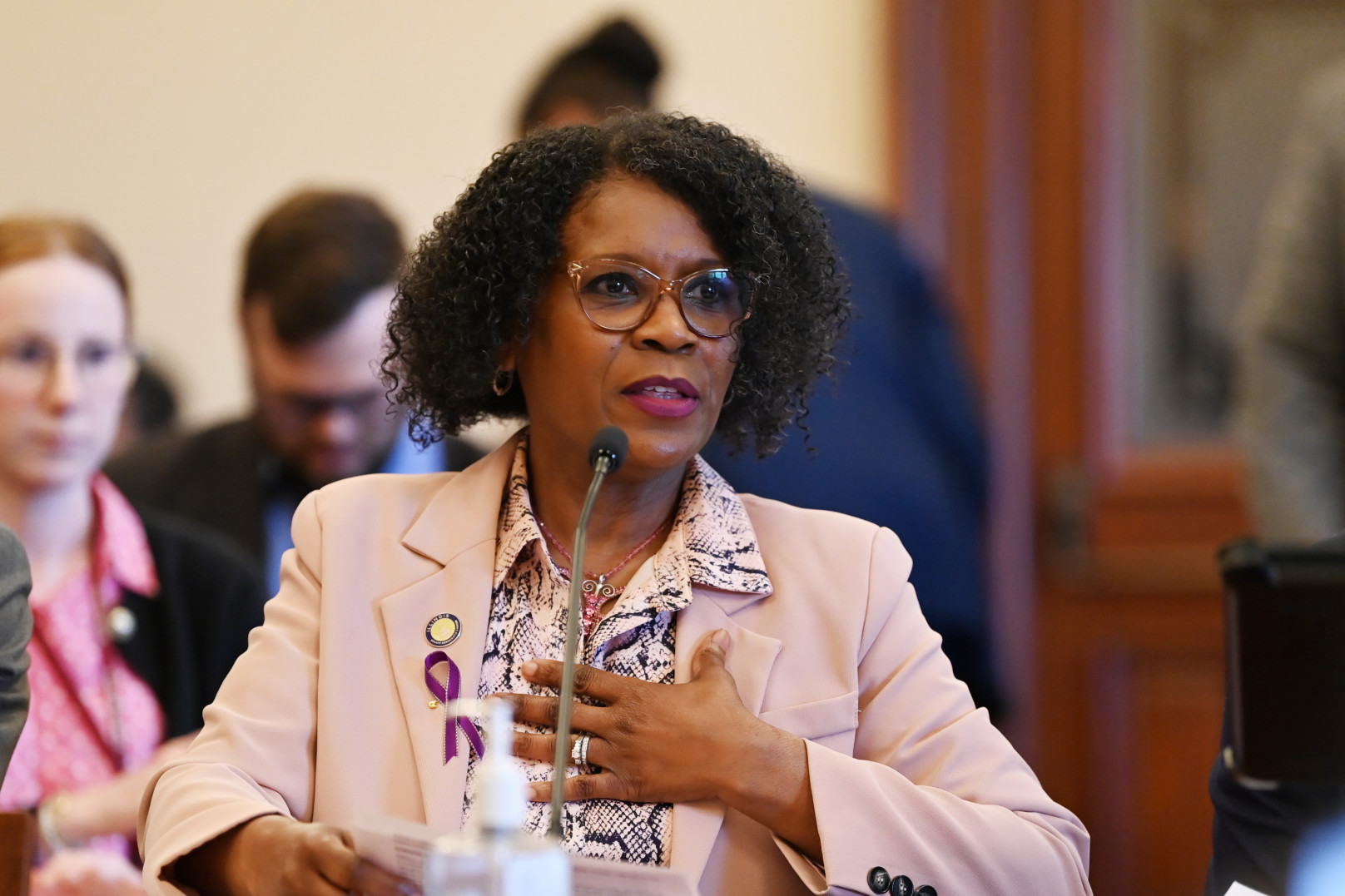
SPRINGFIELD – State Senator Adriane Johnson’s law to require athletic head coaches to learn life-saving techniques has been signed.
“Student athletes depend on coaches for not only leadership and guidance, but also safety during high-intensity activities,” said Johnson (D-Buffalo Grove). “CPR training equips coaches with the skills and confidence to act quickly in cardiac emergencies and protect the lives of those in their care.”
House Bill 3275 will require all paid school head coaches and chief sponsors of the sports activities to obtain training in CPR, first aid and the use of an AED. School districts will be required to conduct an annual cardiac response drill to practice the steps established in its cardiac emergency response plan. The drills are able to be conducted without student participation.
According to the American Heart Association an estimated 23,000 children under 18 experience cardiac arrest in the US each year, and 90% of victims die unless someone nearby is trained to respond.
“Knowing how to respond during a cardiac emergency empowers ordinary people to save lives,” Johnson said. “Education and preparedness turn bystanders into lifesavers when moments matter most.”
House Bill 3275 was signed into law Friday.
More Articles …
Page 1 of 91
Welcome
Thank you for visiting my website! I am proud to serve as the State Senator from Illinois' 30th District, representing much of the Northern Suburbs. I want to make this site a useful resource. I use my website to get your feedback and your opinions so that I can better serve my constituents. I hope you’ll find this site helpful in keeping up to date with what’s happening in our district and in Springfield. If you have any questions about legislation or issues facing our area, do not hesitate to call my office. I always appreciate hearing from my constituents and I greatly value your thoughts, opinions and feedback.
It is my honor to represent you in Springfield.
Sincerely,

Senator Adriane Johnson







Follow Sen. Johnson


eNewsletter Signup
Contact Us
Springfield Office:
Stratton Office Building
Section F, Room E
Springfield, IL 62706
217.782.8181
District Offices:
149 S. Genesee St.
Waukegan, IL 60085
847.672.6201
1 Overlook Pt., Suite 520
Lincolnshire, IL 60069
224.352.2849